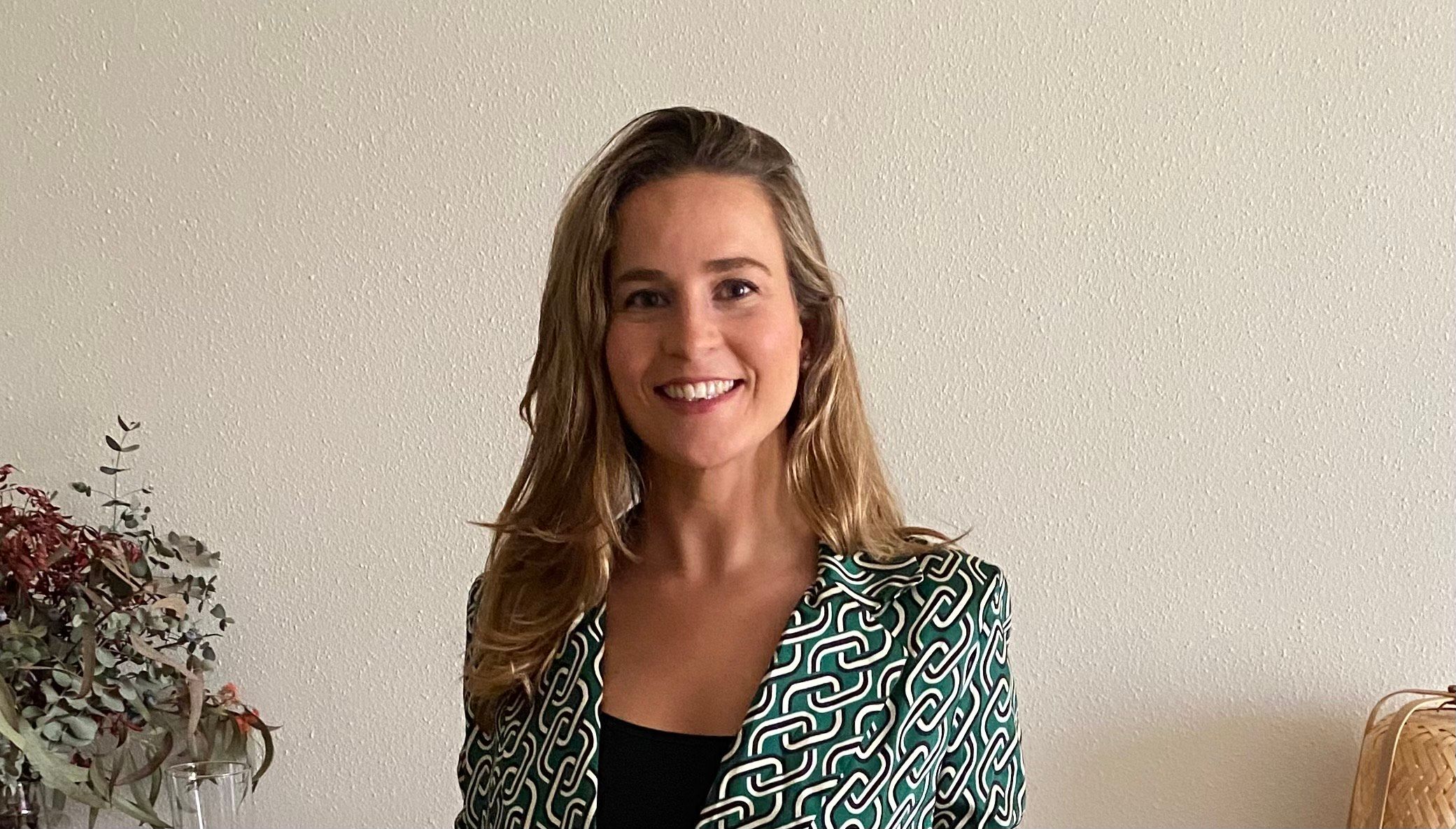
Ainhoa Baucells
Nursing | 2014
There are practices in child health that are difficult to modify, either because “it’s always been done this way” or because not all professionals update at the same pace as new scientific evidence
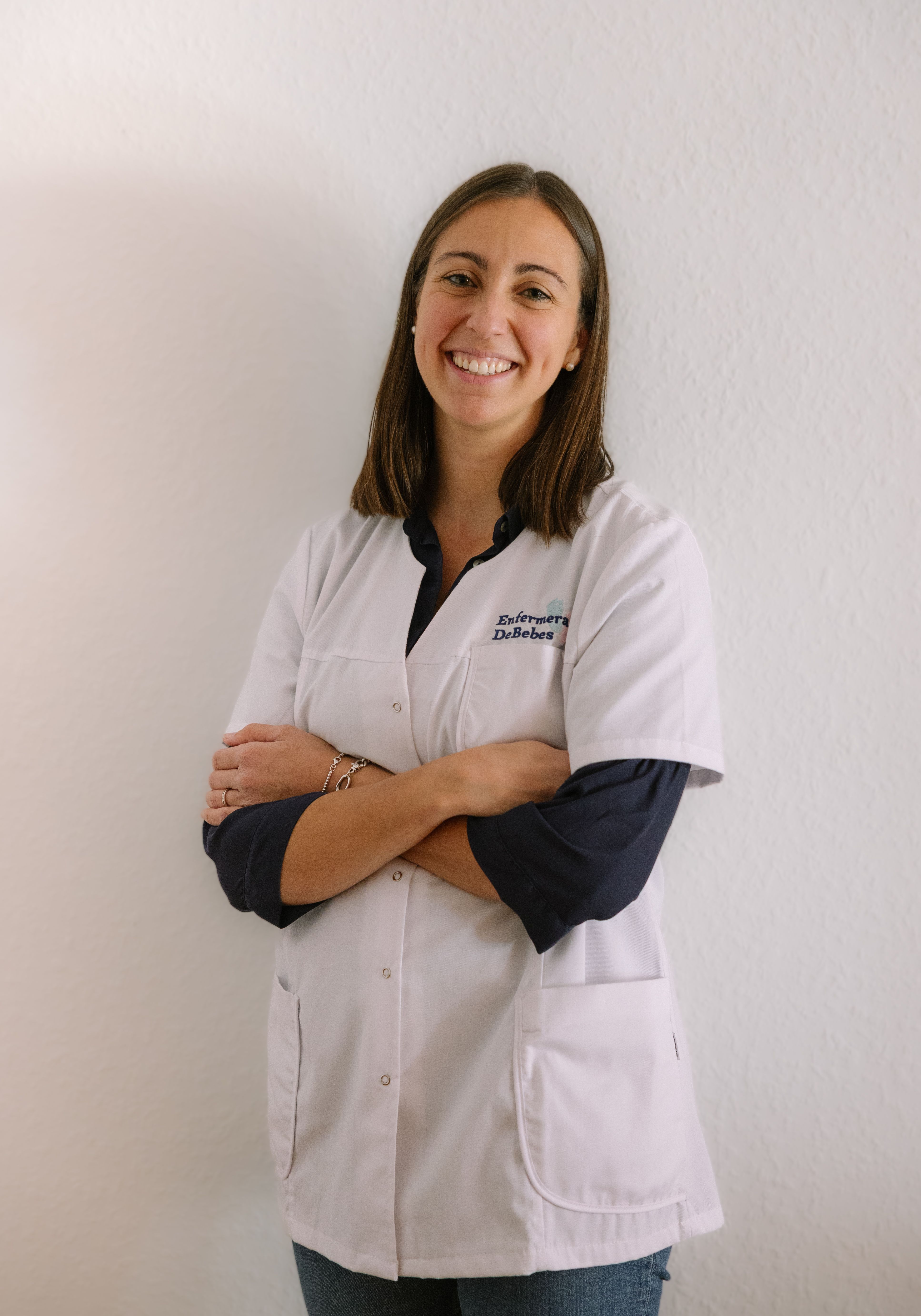
Ainhoa Baucells (Nursing, 2014) is a specialised paediatric nurse and a child health educator on social media (@enfermeradebebes). In this interview, she shares how her time at UIC Barcelona gave her a solid foundation in clinical reasoning, critical thinking and professional rigor, as well as the importance of seeing each patient and family as a whole. She also reflects on her decision to specialise in paediatrics, her experience creating a digital platform for child health education, and the challenges of providing rigorous and accessible information online. Additionally, Ainhoa discusses emerging trends in childcare and paediatrics, her future projects and motivations, and shares personal anecdotes, sources of inspiration and special memories from her university years.
- Who is Ainhoa Baucells? How would you describe yourself and what motivates you in your daily life?
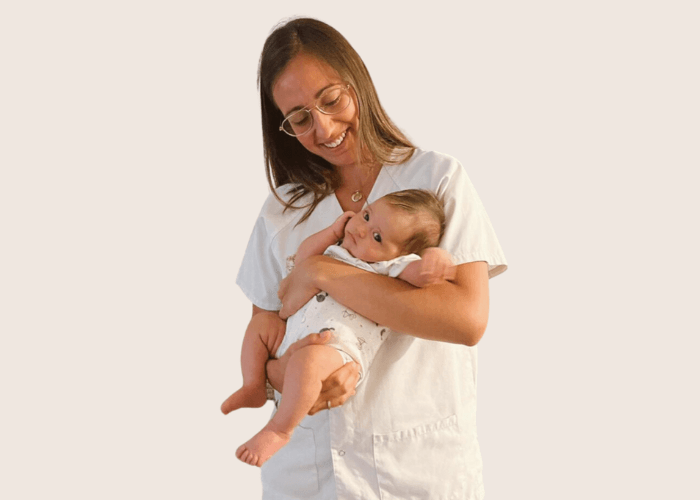
I am a specialised paediatric nurse, mother of four children and child health educator (@enfermeradebebes). My family is the centre of everything, not only as a core part of my life but because motherhood, experienced at different stages and under very different circumstances, has completely transformed the way I understand childcare. Having four children has taught me that there are no universal recipes, that each child needs something different, and that families do the best they can with the tools they have at any given moment.
I define myself as a vocational professional, approachable and very practical, who tries to combine scientific evidence with the daily reality of parenting. Every day, I am motivated by supporting mothers and fathers respectfully, helping them make informed decisions, reduce feelings of guilt and approach parenthood with greater calm and confidence. Knowing that my work enhances family wellbeing is, without doubt, what gives meaning to everything I do.
- What lessons from your time at UIC Barcelona have been most important for your professional development?
At UIC Barcelona, I acquired a very solid foundation in clinical reasoning, critical thinking and professional rigour. I learned the importance of not simply accepting “what seems right” or “it has always been done this way,” but of understanding the rationale behind each decision, seeking evidence and working responsibly.
It also had a profound impact on me to realise that behind every patient there is a person –or in paediatrics, a little person – with a life, a family, a history and a context. Sometimes, without noticing, we might only see “the patient with bronchitis” or “the one with a urinary infection,” and that stage helped me adopt a much deeper, more human perspective, which continues to be central to my way of working today.
- Why did you decide to specialise in paediatrics and childcare?
Children and the world of childhood, especially the baby stage, have always fascinated me. I am the eldest sibling in a large family, and without doubt, that influenced my professional choice.
I have always been struck by the innocence and joy that children radiate, but also by their enormous vulnerability. Much of their being is, to a large extent, in our hands as adults and professionals. Our role, our decisions and our way of caring for them directly influence their physical and emotional development. That responsibility is immense and feeling that I could contribute to protecting and supporting such a fragile and decisive stage of life is what led me to specialise in paediatrics.
- What led you to create social media accounts and start educating about child health?
The decision came from a very personal experience. My second daughter was a high-need baby, and over time, it was discovered that she had a condition that I did not initially recognise. We went through an extremely difficult period, which coincided with the lockdown, so our support network was practically non-existent.
I felt very alone, lost and deeply overwhelmed during that second phase of motherhood. What struck me most was that I was a paediatric nurse, had worked at a leading hospital such as Sant Joan de Déu, held a master’s degree from Vall d’Hebron and had experience in ICU, neonatology and paediatric emergencies – and yet I still felt completely lost and overwhelmed.
My daughter was born in March, and that same summer in June, I felt the need to open an Instagram profile, a small window to the world, to support mothers and fathers who felt as lost in parenthood as I had. It was not intended as a professional project but rather emerged from a very personal sense of responsibility to help.
Later, when I created my project EnfermeraDeBebés, that window also served to make myself known professionally.
- What are the main challenges of providing rigorous and accessible information about child health online?
One of the biggest challenges is combating deeply rooted myths. Fortunately, science is advancing, and in paediatrics, recommendations have changed and continue to change very rapidly, which is extremely positive. However, there are practices and beliefs that are difficult to modify, either because “it’s always been done this way” or because not all professionals update at the same pace as new scientific evidence.
Another significant challenge is the presence of extreme or alarmist messages. Education based on fear, such as “watch out, if you don’t do this…” or constantly generating alarm does not help families. On the contrary, it increases insecurity and guilt.
- What trends or changes in childcare and paediatrics do you think we will see in the coming years?
I believe we will see education increasingly focused on the everyday challenges faced by families. Traditionally, healthcare training was very focused on diagnosis and treatment, while prevention and health education were often secondary, frequently approached from a very paternalistic perspective.
Today, parents and caregivers are well-informed, and that requires healthcare professionals who can support, explain and reach consensus. Knowledge in areas that may seem more “trivial” will gain importance, but these are exactly the areas that occupy most family concerns: sleep, eating habits, tantrums, behaviour and emotional management. All of this should be based on scientific evidence but grounded in everyday reality. The current challenge is that this approach still depends heavily on each professional’s personal judgement.
- Are there any new formats or initiatives you would like to develop soon?
I am constantly thinking about and creating new online courses that respond to the real needs I observe in my community. Additionally, I am currently writing a book, a project that excites me and will allow me to help families in a different format.
- A phrase that represents you: “Care with information, accompany with empathy.” I firmly believe that life, and especially parenthood, can be much simpler when we are well-informed and well-supported. Life is complex enough already, so it is worth trying to simplify it where possible.
- Favourite music: Passenger and piano music.
- Favourite place: I don’t have a single favourite place, but thinking about this question brings back memories of places where I have been very happy: the summer house of my childhood in Aragón, my parents’ home or where we now spend summers in the mountains with my family. But the reality is that, cliché as it may sound, any place I am with my family is a good place.
- A book, movie, or series you recommend: The Whole-Brain Child, by Dr. Álvaro Bilbao.
- A memory from your time at UIC Barcelona: I remember my time at UIC Barcelona fondly because I never felt like “just another student.” I felt that each student was treated as a person, with a name and identity, and that the training was adapted to our needs and particularities.
I also have a very special memory of volunteering through the Gynaecology and Obstetrics course. For two months, I was in Guatemala participating in a training project, an intense experience that profoundly impacted me both professionally and personally and reinforced my vocation and approach to care and health education.
Additionally, one of the greatest gifts from my time at university was meeting my best friend. We met during our studies, and over time our friendship has remained intact. Today, she is a key person in my life and the godmother of my third child.