Marta Ferrón
University Master’s Degree in Paediatric Physiotherapy | 2024
Marta Ferrón
Physiotherapist specialising in paediatrics and a predoctoral researcher in Health Sciences
University Master’s Degree in Paediatric Physiotherapy | 2024
In paediatrics, not only do you work with the baby or child, but also with their family, school and environment
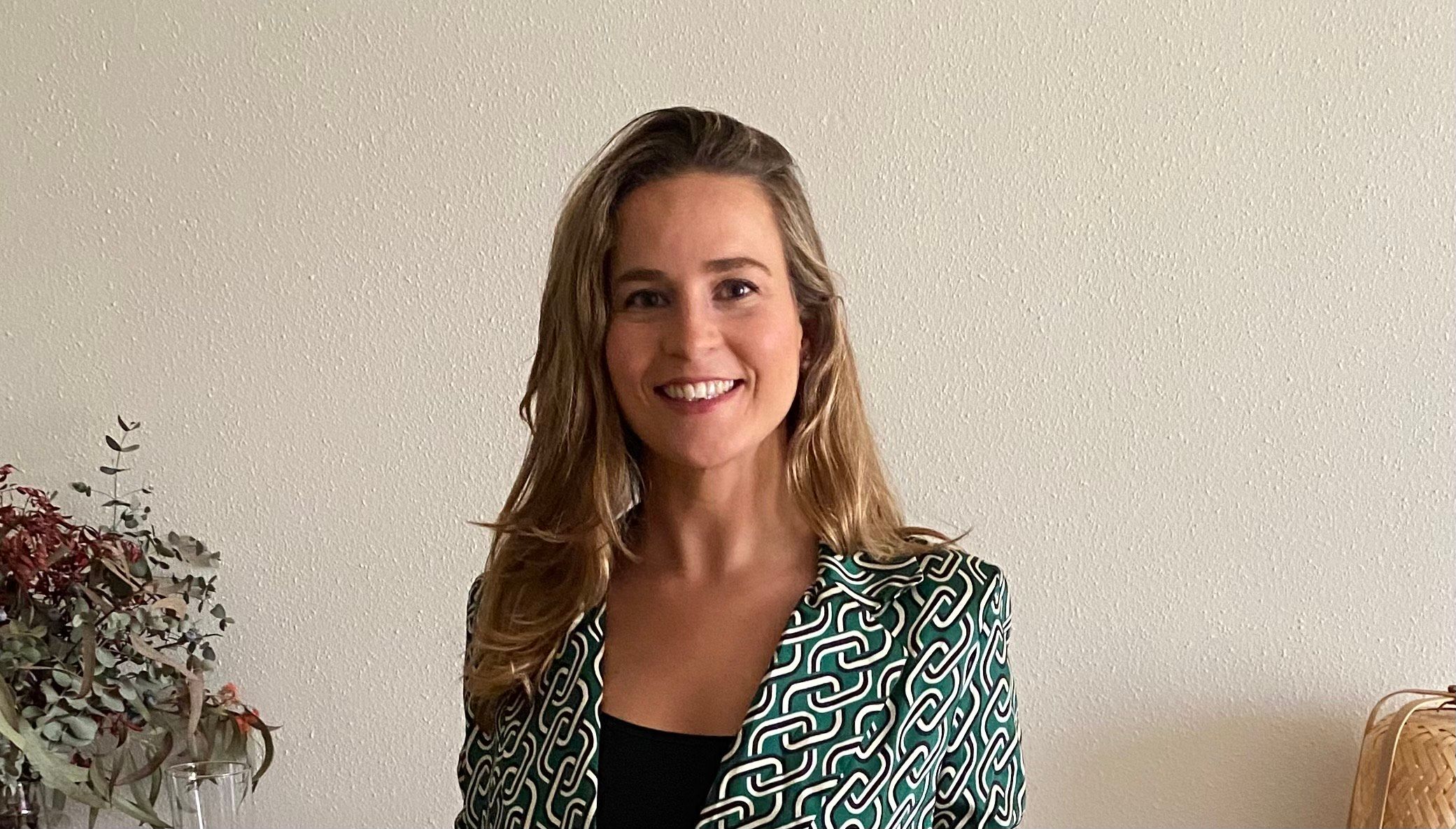
Marta Ferrón (University Master’s Degree in Paediatric Physiotherapy, 2024) is a physiotherapist specialising in paediatrics and a predoctoral researcher in Health Sciences. In this interview, she discusses how her time at UIC Barcelona proved decisive in pushing her towards a career in research and teaching, her commitment to a person-centred approach in paediatric physiotherapy and her doctoral work with adolescents with asthma. She also reflects on the role of technology in clinical practice and the key insights that have marked her professional development.
- Who is Marta Ferrón? How do you describe yourself and what motivates you in your daily life?
That’s a complicated question, because we are not exactly the same in every aspect of our lives. Even so, I would say that what defines me most is self-determination, the desire to learn and improve and resilience in the face of difficulties. And yes, I am also quite a nerd.
What motivates me most is the feeling that, through hard work and perseverance, I can come close to achieving almost anything I set my mind to, even if things do not turn out perfectly the first time. The idea of building my own path, step by step, is what drives me.
So, in practice, I am a paediatric physiotherapist and currently a PhD candidate in Health Sciences, supported by an FPU grant (University Teacher Training Programme). In my free time, I enjoy reading, watching series and listening to music, and I try to bring that mix of consistency, curiosity and nerdiness to everything I do.
- Which lessons from your time at UIC Barcelona have had the greatest impact on your professional development?
In addition to the clinical knowledge I gained during the master’s programme, which I was able to apply in clinical practice while studying, the most important takeaway from my time at UIC Barcelona goes beyond theory.
That experience helped me realise that my path lies in research and teaching. I had the opportunity to observe teaching models that combine scientific rigour, empathy and a strong commitment to the field, and that helped me begin to envision myself in a similar role.
- What drew you to paediatric physiotherapy and what makes it different from other areas of the profession?
For me, paediatric physiotherapy is the field in which it becomes most evident that we do not treat just “physical conditions”, but the person in all their dimensions. In paediatrics, not only do you work with the baby or child, but also with their family, school and environment.
Through the therapeutic relationship, education and empowerment, you can support families in processes that go far beyond the initial condition. It is also typically transdisciplinary, involving professionals from many different fields, not just healthcare, which means that every day you learn something new and broaden your horizons.
- What is the focus of your doctoral research and what impact do you hope it will have on clinical practice?
My doctoral project builds upon my master’s thesis, in which I focused on one of the most challenging – and at the same time most vulnerable – populations to study: adolescents. I believe adolescence is one of the most complex stages in human development, a time when autonomy, self-care, self-concept and the way of envisioning adult life are shaped, all amid constant physical, psychological and social changes.
Specifically, my thesis focuses on adolescents with asthma and aims to understand and improve their quality of life. This can be done through education and professional support, helping them become more autonomous and develop self-management skills that allow them to positively modify factors that affect their quality of life and which can be modified. The goal is not only to improve how they feel now, but to promote lasting changes that benefit them into adulthood.
I hope this study, together with others in the same line of research, will contribute to promoting non-pharmacological, multidisciplinary and multidimensional interventions in clinical practice; approaches which consider the person as a whole, rather than just the disease.
- What role do you think technological developments will play in the future of paediatric treatment?
Technology has been part of our lives for many years, but it is now increasingly integrated into everyday life and accessible to paediatric patients, their families and professionals. When used properly, it can be a powerful ally as a complementary tool in paediatric interventions.
It can help improve adherence, motivation and treatment monitoring, raise awareness among patients and families about daily life patterns, while at the same time reducing part of the administrative burden on professionals, allowing them to focus more on the clinical and relational aspects of their work. It does not replace the therapeutic relationship, but it can strengthen it and make it more sustainable.
- What advice would you give to a physiotherapist who is considering pursuing a PhD?
First, I would tell them to choose a project that truly motivates them, one born from curiosity and the desire to learn, and which has real-world relevance. A PhD is essentially a full-time job for about four years, and there will be demanding moments. In those moments, it is crucial to feel that what you are doing is worthwhile and that the project aligns with your values and the contribution you want to make to the world.
I would also recommend taking full advantage of the resources available during the doctoral process: funding opportunities for research stays, conferences, cross-cutting training, teaching experiences, and so on. Equally important is understanding that many factors will be beyond their control and that plans may change. Learning to navigate that uncertainty is part of the doctoral process itself.
- A phrase that represents you: Don’t give up
- Your favourite music: International pop. My favourite singers are Shawn Mendes and Olivia Rodrigo, and my favourite band is Imagine Dragons.
- Your favourite place: My home, because it’s where the person I love is and where I feel most myself.
- A film or series you would recommend: Any movie from the Step Up saga.
- An anecdote from your time at UIC Barcelona: At first, I hadn’t planned to enrol in the master’s programme at UIC Barcelona. I had completed my undergraduate degree at another university, and my first option was to do the paediatric master’s there, as I was familiar with the institution and the teaching staff. However, that year, the programme wasn’t offered, and I discovered the programme at UIC Barcelona as an alternative. What started as a “Plan B” turned out to be an excellent decision. After getting to know how the University works, its values, the environment and the vision of the Department of Physiotherapy, I realised it was a perfect fit for me. If I could go back, even if the master’s programme I originally wanted to do was available, I would still choose the one at UIC Barcelona.