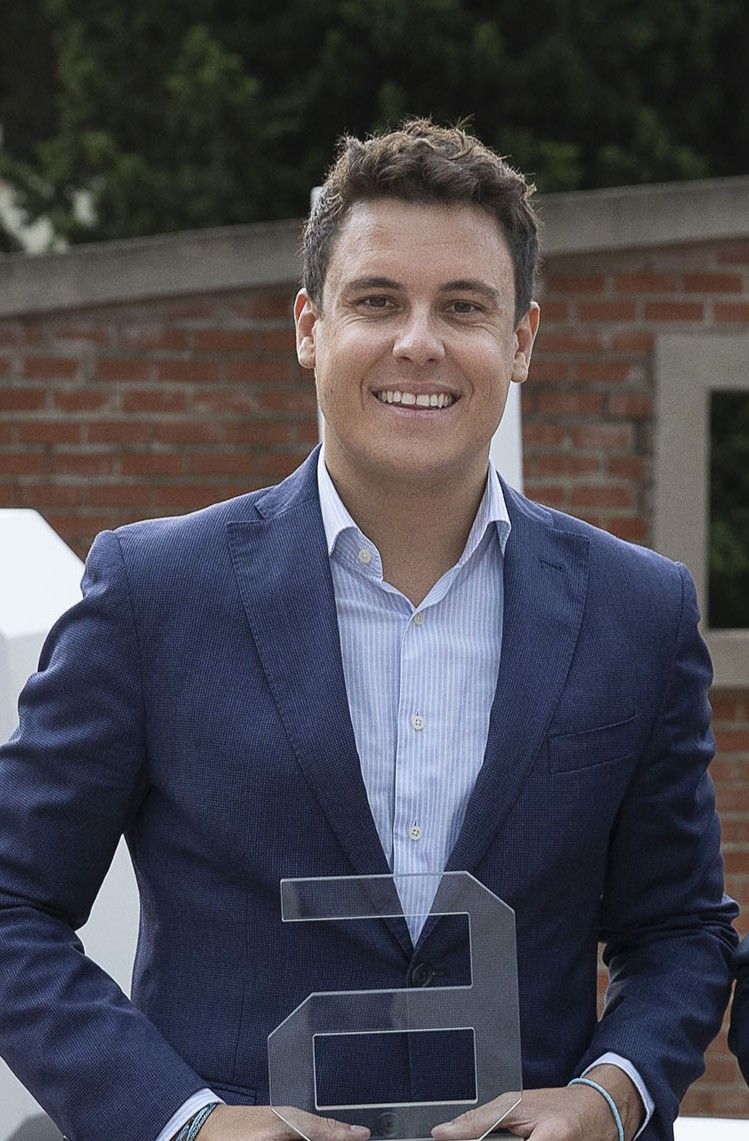
Ana Guerrero
Architecture | 2020

The reuse of space vehicles represents a true paradigm shift, as it allows a much wider audience to access space
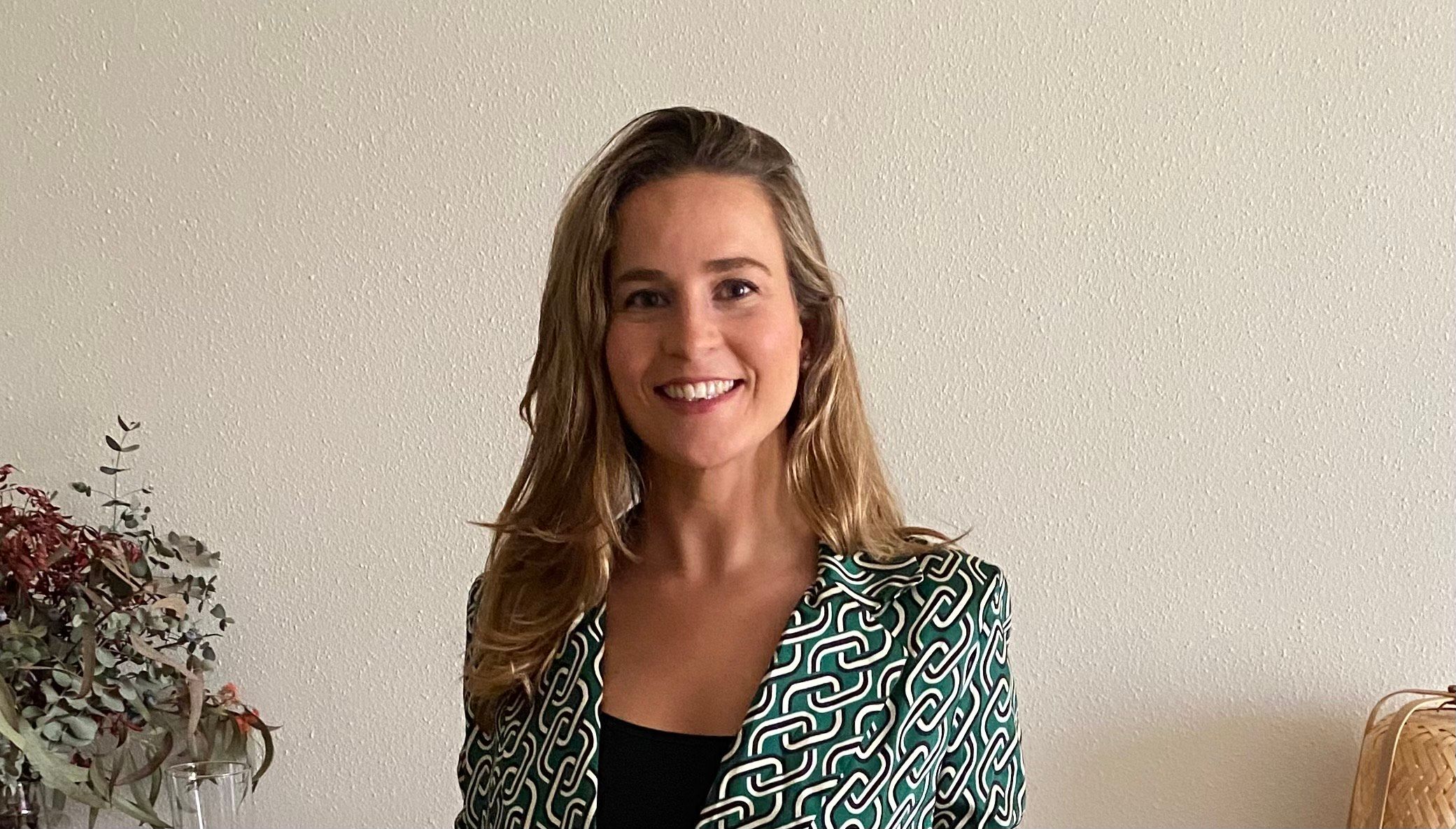
Ana Guerrero (Architecture, 2020) is co-coordinator and science communicator at AulaSPUTNIK, combining her architectural training with scientific outreach and specialising in space architecture. In this interview, she shares how her time at UIC Barcelona provided her with tools and resilience to develop her career, how her interest in the design of space environments emerged, and how she communicates these concepts to the general public. She also addresses the importance of sustainability, resource efficiency and technological innovation in her projects, as well as her vision for improving the living experience of astronauts on long-duration missions. In addition, she shares personal anecdotes, sources of inspiration and her future plans in research and science communication.
- Who is Ana Guerrero? How would you describe yourself and what motivates you in your daily life?
Ana Guerrero has been, and continues to be, that curious little girl, now a woman, whose eyes light up when discovering and learning new things. I am a person with diverse interests; I love finding intersections where different disciplines can be combined, which is how I ended up specialising in space architecture.
What motivates me is the possibility of doing things a little better than before, improving the quality of life of those around me and contributing to sustainable development as a society.
- Which lessons from your time at UIC Barcelona have been most important for your professional development?
From my time at UIC Barcelona, I would highlight the resilience I gained during those years, which is applicable to every area of my life. I would also highlight the closeness and human approach of the teaching staff, with whom I still exchange correspondence from time to time.
- New technologies are evolving rapidly. Which trends do you think will shape the future of the sector?
In the field of communication, artificial intelligence has brought a radical change in the way people learn, especially for young people. This presents a clear challenge for communicators: we must strengthen critical thinking and ensure that the information we convey is accurate and valuable.
Regarding the space sector, another area where I focus my professional life, the reuse of space vehicles represents a true paradigm shift, as it allows a much wider audience to access space. This shift in space exploration accelerates technological development, enabling numerous scientific advances to materialise in our daily lives on Earth, generating significant improvements in less time than expected in areas as diverse as healthcare and telecommunications.
- What role do sustainability and resource efficiency play in your projects?
Both sustainability and resource efficiency are values that I convey in all my activities as a science communicator to all audiences. In every activity, there is always a nod to the importance of maintaining an environmentally respectful attitude, and this is one of the key requirements emphasised in the workshops I collaborate on. Moreover, these values guide my own professional work.
- As a science communicator, how do you bring the concepts of architecture and space design closer to the public?
In numerous scientific talks, I present the concept of space architecture when discussing the importance that manned space missions have had and continue to have. It is often a topic unfamiliar to most of the public, so I make an effort to convey its relevance, especially now that long-duration missions are being planned: the spaces that astronauts inhabit must be truly designed by professionals who understand how the human body interacts with the environment and how architecture affects the psychological well-being of the crew.
Whenever I have the chance to speak with an astronaut who has spent some time living in space, I ask the same question: “What would you change architecturally in the space you had to live in under microgravity?” The answer is usually the same: the lack of humanity and life in those spaces. They ask us to bring Earth to space. To achieve this, we have several strategies, some well-developed and others still with a long way to go and to be tested.
- What projects would you like to develop or explore in the future?
In the future, I would like to carry out research projects that truly lead to substantial improvements in astronauts’ living experiences beyond Earth. I am particularly interested in how space (shape, dimensions, proportions, materials) affects the psychological wellbeing of astronauts – people who isolate themselves and face extreme conditions for increasingly longer periods.
- A phrase that represents you: Ad Astra Per Aspera.
- Your favourite music: I enjoy a wide variety of music, but I mostly move between pop-rock from the 70s, 80s and 90s, Catalan rumba and indie.
- Your favourite place: My family, wherever we are.
- A book, movie or series you recommend: The Universe in Your Hand – Christophe Galfard.
- An anecdote from your time at UIC Barcelona: On the day of the final project submission in the 4th year, after a frenetic last week of projects, I parked my car where I always did, as did many students from all faculties in the area. That day, after finishing and exhausted from all the effort, when I went to get my car at 23.00, it wasn’t there. Neither mine nor anyone else’s. However, the sidewalk was full of yellow triangles from the tow truck. At that time, and as tired as I was, I had to manage retrieving my car from the impound lot where it had been taken. Luckily, my parents were able to help me and we went together.