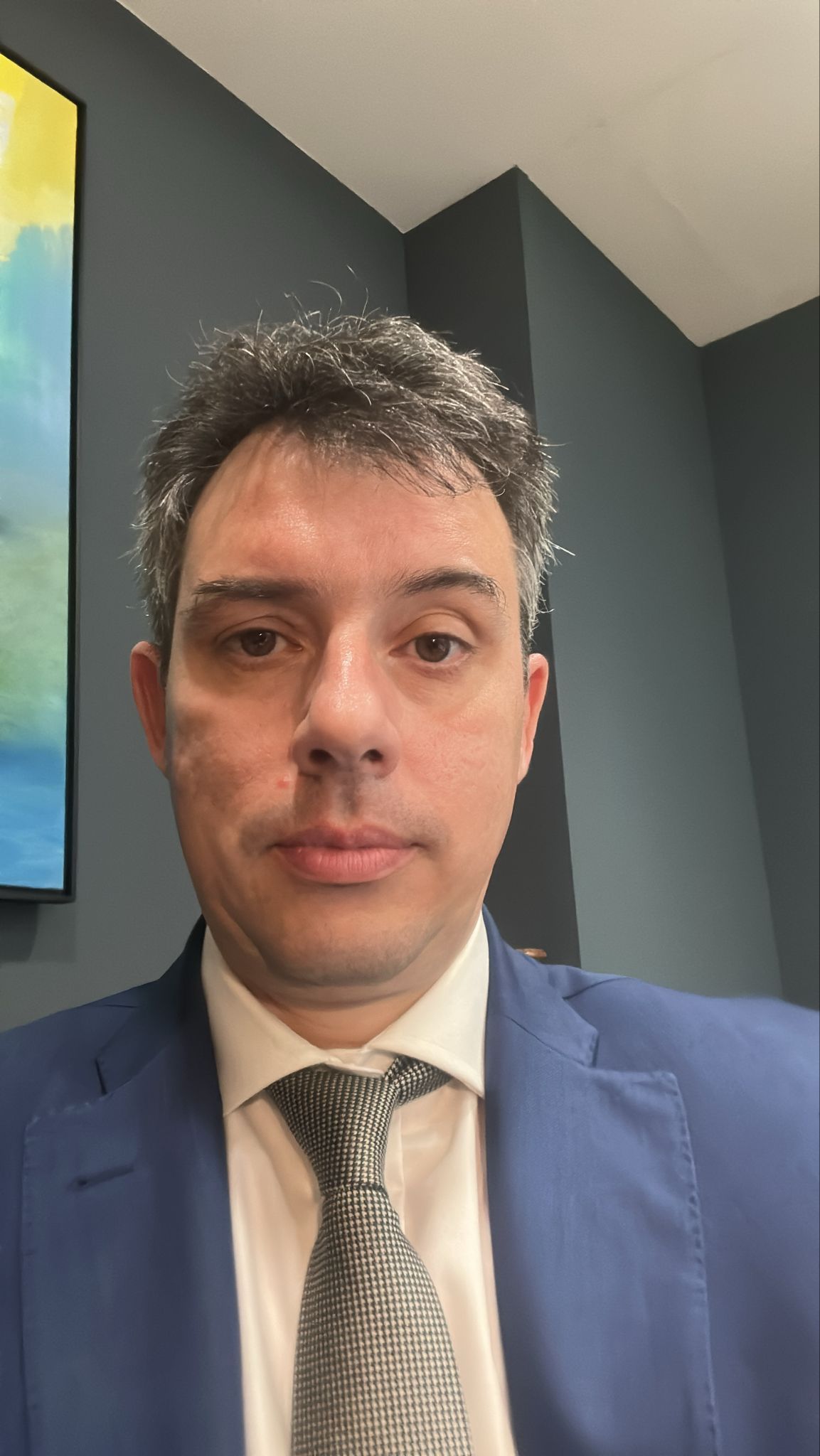
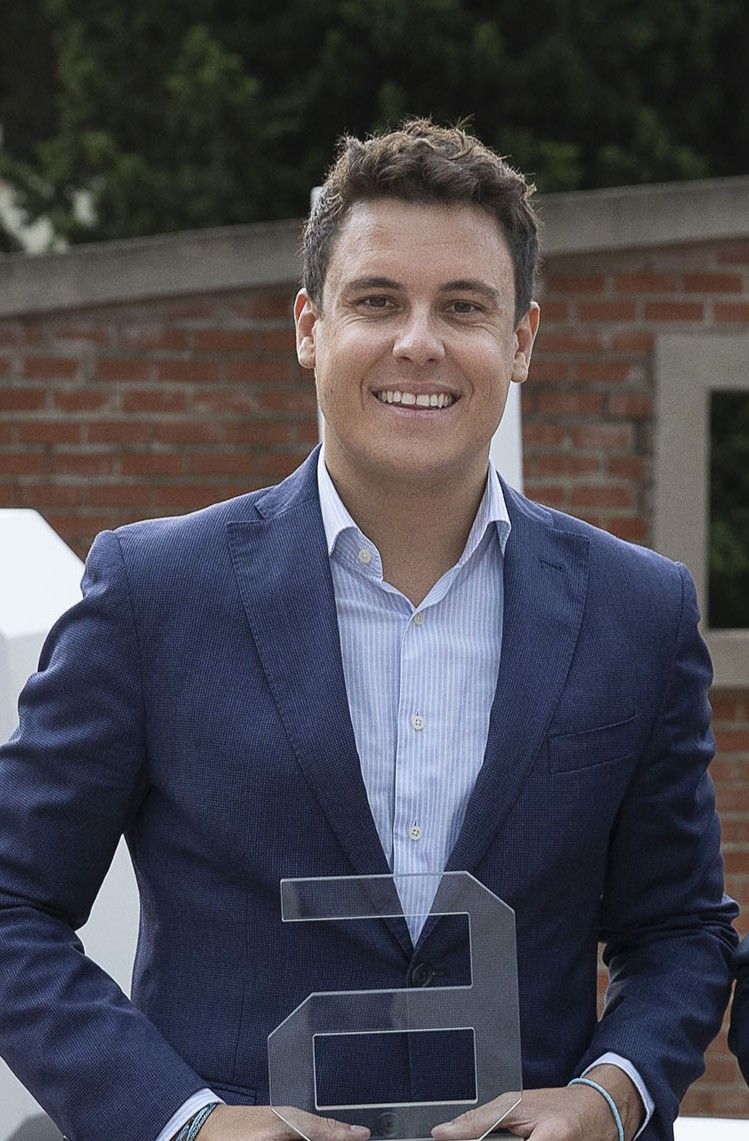
Arturo Cirera
Medicine | 2018
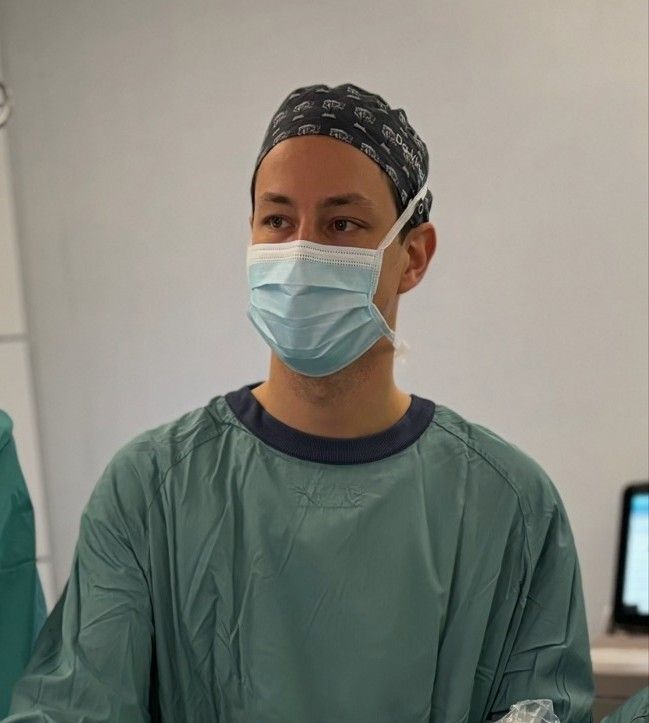
Specialisation does not detract, it adds: each professional brings their experience, insight and unique perspective on surgery
Arturo Cirera (Medicine, 2018) is a general and digestive surgeon specialising in colorectal surgery and a member of the Colorectal Surgery Unit at Quirúrgica Cirujanos Asociados. In this interview, he reflects on his medical calling and patient-centred approach, the demands and formative value of residency training and the importance of teamwork in specialised surgery. He also shares his perspective on the skills required to develop a career in surgery, the role of innovation and artificial intelligence in digestive surgery and his future motivations, always from a human-centred, rigorous and excellence-driven standpoint.
- Who is Arturo Cirera? How would you describe yourself and what motivates you in your daily work?
I would define myself as a curious, consistent person with a strong person-oriented mindset. Professionally, I am a surgeon, but above all, I consider myself someone with a strong commitment to service. What drives me is being able to accompany patients through particularly challenging times in their lives and knowing that, through careful work and daily dedication, I can help improve their quality of life.
In my daily work, I am driven by the desire to keep learning, improve as a professional and work in teams where dedication, rigour and mutual respect are fundamental. Surgery is demanding, but also deeply rewarding, and that combination is what keeps my motivation alive.
- Which lessons from your time at UIC Barcelona have had the biggest impact on your professional development?
My time at UIC Barcelona was key both academically and personally. Beyond technical knowledge, I would highlight the emphasis placed on comprehensive training: critical thinking, empathetic patient care and professional ethics.
I learned to view medicine as a team effort, to stay rigorous and to never lose sight of the fact that behind every clinical case there is a person. This demanding and humanistic approach has provided a solid foundation for my subsequent professional development.
- What did the residency period mean to you, and which lessons from those years do you still apply today in the operating room?
My residency at Vall d’Hebron University Hospital was a period of intense growth, both professionally and personally. It involved learning to make decisions under pressure, to progressively assume responsibility and understand the importance of discipline and constant preparation.
Today, in the operating room, I continue to apply many of the lessons learned during my residency: the importance of meticulously planning each procedure, the ability to anticipate potential complications, always having a plan B – and sometimes even a plan C – and the value of clear and effective communication across the entire team. Residency also teaches you the humility needed to ask for help when necessary and reminds you that surgical excellence is never an individual achievement, but always the result of collective effort.
- What has it been like working in a specialised surgical team?
Working in a specialised surgical team has been, and continues to be, a deeply enriching experience. In my case, first in the Colorectal Surgery Unit at Vall d’Hebron Hospital and currently at Quirúrgica Cirujanos Asociados, I have seen how this model allows for a more comprehensive approach to cases, facilitates knowledge sharing and supports more solid and consensus-driven decision-making. Specialisation does not detract, it adds: each professional brings their experience, insight and unique perspective on surgery. Moreover, this environment fosters continuous learning and constant improvement, which is essential in a discipline as dynamic as ours. For me, the proper functioning of the team is just as important as individual technical skill, and fortunately the traditional model of the lone surgeon is now virtually obsolete.
- What skills do you consider important for someone interested in pursuing a career in general or colorectal surgery?
In addition to a solid technical foundation, I think consistency, work ethic and resilience are key. Surgery requires long hours, continuous effort and adaptability. As many of my mentors often reminded us, “surgery is all about flight hours”: experience and daily practice are what really make you better.
I would also highlight skills such as communication, teamwork, analytical ability and decision-making. And, of course, empathy: understanding the patient, listening attentively and providing support are just as important as the surgical technique itself.
- What role do you think artificial intelligence or clinical decision-support tools will play in digestive surgery in the coming years?
These tools will play an increasingly important role. They will help improve diagnostic accuracy, surgical planning and treatment personalisation. However, I think they should complement clinical judgement, not replace it. The surgeon’s experience, clinical insight and human touch will remain irreplaceable. The challenge will lie in integrating these technologies in an ethical and responsible way, always in the service of the patient.
- Looking to the future, which projects or areas would you like to explore in your career?
Looking ahead, I would like to further explore my specialisation, combining clinical practice with continuous education and, if possible, teaching or research projects. I am particularly interested in improving surgical outcomes, fostering innovation and streamlining healthcare processes. I am also eager to support the education of new generations of physicians, transmitting not only technical knowledge but also professional and human values that I consider essential in medicine.
- A phrase that represents you: “Big dreams require extraordinary efforts.”
- Your favourite music: I enjoy listening to music that combines rhythm, melody and a touch of the epic, the kind that lifts your spirits and keeps you company for hours.
- Your favourite place: My favourite place is my hometown, Barcelona, a city that defines me both personally and professionally. It’s an open, dynamic and cosmopolitan city where I always find inspiration. And when I need to disconnect and unwind, the Empordà or the Pyrenees are my refuge – places where I can slow down, reconnect and return with renewed energy and perspective.
- A book, film or series you would recommend: Book: When Breath Becomes Air, by Paul Kalanithi, a very honest account of the medical calling, life and how to face difficult moments without losing one’s humanity. Film: Shutter Island, for its suspense and the way it makes you constantly question what you are seeing. Series: House of Cards, for its raw portrayal of power, ambition and decision-making in complex environments.
- An anecdote from your time at UIC Barcelona: One of the best – and undoubtedly most important – personal anecdotes from my time at UIC Barcelona was meeting the person who is now my wife, Claudia. The university is not only a place of academic training, but also a space where lifelong bonds are formed. I made great friends there who continue to be a central part of my life, having shared years of learning, hard work, laughter and experiences that extend far beyond the classroom.