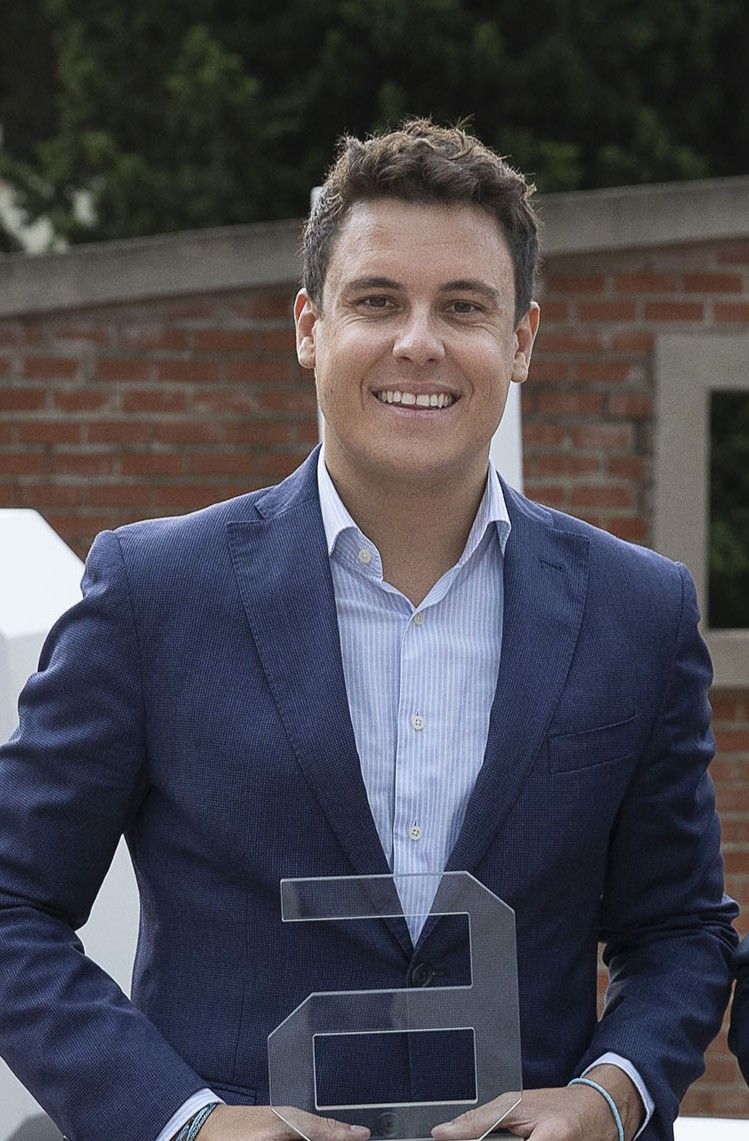
Joan Girbau
Audiovisual Communication | 2013
I believe AI is a powerful tool, but where there is deep, well-worked human soul and creativity – where technique is fused with intuition and consciousness – AI will struggle to reach that level
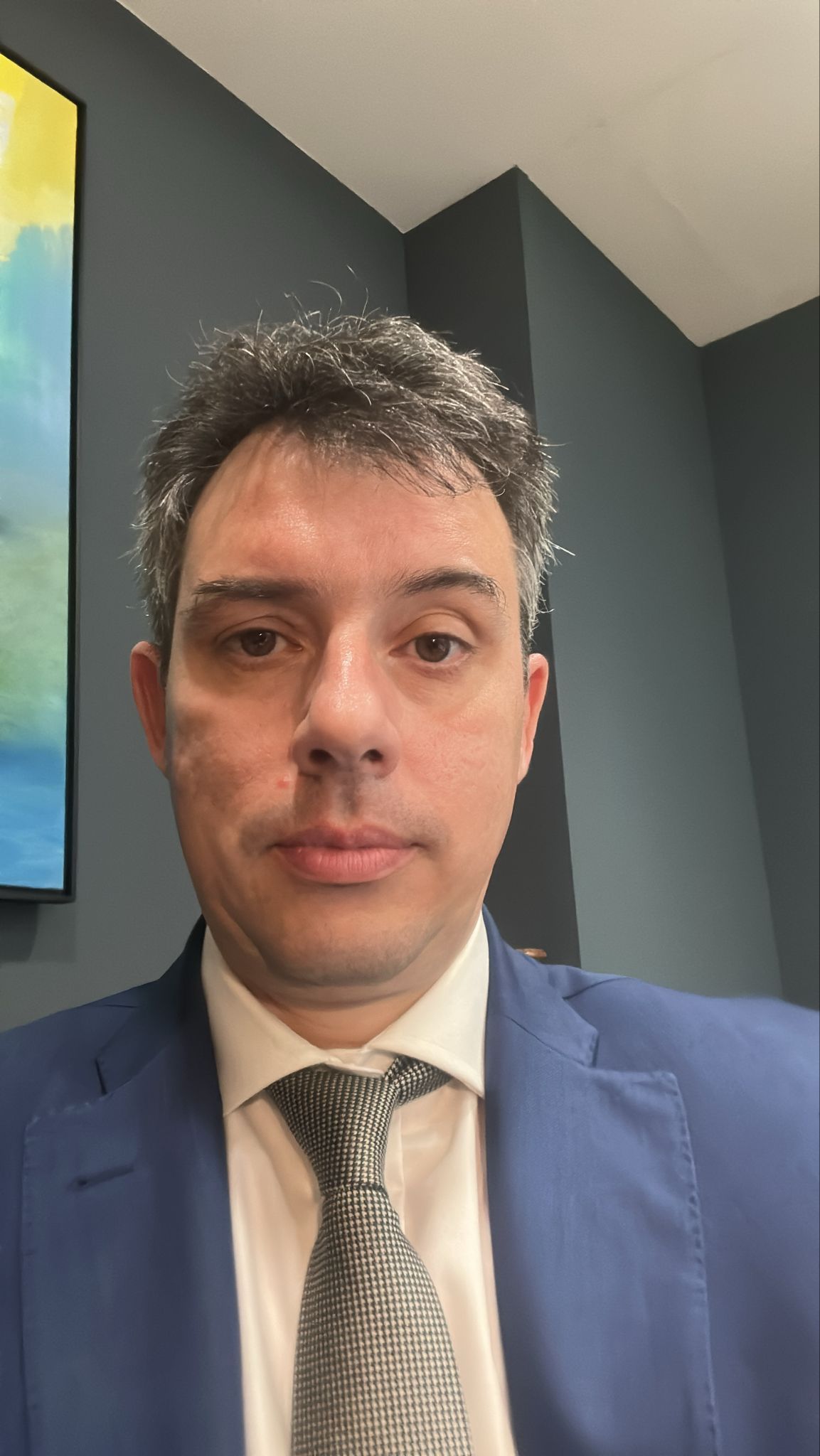
Joan Girbau (Audiovisual Communication, 2013) is the director of the audiovisual production company Artechnet, with a career defined by the combination of artistic sensitivity, technical expertise and a strong vocation for telling emotionally engaging stories. In this interview, he reflects on his professional journey within the audiovisual industry, the value of his university education, the experience of developing independent film projects and the creative and ethical challenges posed by the emergence of artificial intelligence in the sector.
- Who is Joan Girbau? How would you describe yourself and what motivates you in your daily life?
I’m not sure I am the best person to define myself. I think who I am gets lost somewhere between what I believe I am and what others perceive me to be. And even then, it would probably be incomplete. I would say that I am partly a dreamer and an idealist, and partly pragmatic and solution-oriented. Creative and chaotic, and at times perfectionist and orderly. A soul that is sometimes active, sometimes contemplative, eager to listen and to tell stories to the world that touch people’s hearts. A fascination with beauty and with reaching the inner core of that reality – different for each person – reminds me of the purpose behind films: above all, to entertain and to move.
- Which lessons from your time at university have been most important for your professional development?
Professionally and personally, I learned a great deal from outstanding professionals in the film and advertising sectors; several of them were also my professors at university. In terms of exploring a subject and finding my own artistic voice, I learned a lot about audiovisual narrative with Joan Marimón, and about documentary language with Ricard Mamblona, both active film directors. In visual storytelling, I learned a great deal in cinematography and film directing, and how light, movement, intention and all the elements at our disposal affect how the audience perceives the story we are telling. The same applies to musical narrative: with Isabel Villanueva, music serves not only an aesthetic function within a scene, but also as a unit that creates an emotional and intellectual relationship with the viewer. On the more pragmatic side, in audiovisual production I learned a great deal from Arturo Méndiz (who, in addition to being a great producer, has won Goya and Cannes awards and has been nominated for the Oscars). I would like to point out that all of this is re-learned and completed once you step into the real world. I could mention many more people. Above all, it is worth appreciating that many lecturers are active professionals. You can tell they know the theory, but they also know when practice requires stepping outside the manual.
- After ten years in the audiovisual sector, how would you describe the evolution of your career and its most important milestones?
At first, when I graduated, I had no idea what to do with my life. I think that’s a fairly common feeling when finishing university, especially in the audiovisual sector. I started working with whatever I could find close to home in Girona, at a pioneering 3D cinema company. There I was able to handle top-tier film equipment, including the original Arri Alexa cameras, lenses, lights, and different post-production rooms for editing and colour grading. There was everything. When the company went bankrupt, I decided to go freelance, making very short videos for friends and friends of friends, using my parents’ DSLR camera. Later on, together with Albert Escuder – a great producer and good friend, founder of the production company Adauge – we began our journey with a couple of documentary feature films which we didn’t get paid for, but from which we learned a great deal. We shot them between Spain and Italy (Rodando al Destino, 2016) and in Greece (Faraway Land, 2018). Alongside more commercial and corporate work that each of us did independently, we have been developing projects with stories that truly touched our hearts and that we genuinely wanted to tell. Little by little, we have built individual professional paths and then a shared one. I think the journey has been about moving from stumbling blindly to starting to have a clearer sense of what to do and what to avoid. Mentally, you also move from the euphoria of thinking how beautiful this artistic profession is to a sometimes desperate mental and emotional exhaustion. Although each project is unique, I always have the feeling of starting from scratch, as if I have suddenly forgotten everything and I am a beginner facing something that feels new (even though I’ve done it a thousand times).
- Is there any project or work you consider key to your professional development?
On a commercial level, being able to work for Mango was key for me. During the shoot we met Toni Ruiz, the current CEO of Mango, and Isak Andic, the founder of the fashion giant; and we did so with a former UIC lecturer, Carles Cardelús, a great director and cinematographer, with whom we have continued to stay in touch after university. At that time, this major client opened many doors for me. On a more cinematic level and focused on real stories, I shot a small documentary in Uganda entitled Children of God. In addition to several awards and nominations at international festivals, it was selected and screened at the prestigious IFFI-GOA, the most important film festival in India. On both a professional and personal level, starting to work with Albert on Rodando al Destino and Faraway Land was also key, not only because I learned a great deal professionally and artistically, but also because these projects led me to meet one of my best friends. In 2025 we are releasing Solo Javier in cinemas, with Josepmaria Anglès, another friend and collaborator on our last two projects. We are currently preparing a very interesting project about a certain architect from Barcelona.
- From your experience, what are the most important changes audiovisual communication has undergone in the last decade?
Technical and creative aspects are constantly evolving. Technology is changing at an extremely fast pace: all brands compete to offer something better than the rest in record time. At every camera and lighting trade fair, more groundbreaking innovations appear. Brands like Blackmagic make very affordable cameras with spectacular quality available to independent filmmakers (if you know how to get the best out of them). This aggressive competition in low-cost cinema has democratised camera and lighting equipment, making it accessible to many more people who want to break into this industry to tell stories. On the creative and narrative side, the more films you watch and analyse, the more you learn. When a shot or a technique provokes an emotion or a sensation, generating a reaction in you toward the plot and the character you’re following, you study it and later apply it to your own project. I think digital platforms are a great tool for watching a large number of great films. It is true that, to offer variety, many of them produce a lot of content, and often it is just that: content. But among “average” films, there are pleasant surprises such as Society of the Snow by J. A. Bayona or Sirat by Oliver Laxe – both great directors whom I admire and whom I am grateful to have met in person and spoken with. My brother Andreu has a PhD in AI and works in Tokyo; he is very talented. He always seeks to be at the frontier of his field, taking into account the ethical aspect of what he does. We’ve had many conversations, and he is aware of both sides of the AI coin. Despite being an undeniably powerful technical tool, how does it affect us in the present and how might it affect us in the future? I think AI could represent a major change not only in the audiovisual industry, but in the world in general. It opens up a cultural, intellectual and moral challenge that we will all need to explore carefully, so that we don’t end up like in Wall-E or District 13 in The Hunger Games.
- What is it like to run an audiovisual production company in the midst of the artificial intelligence revolution?
When I started, I was on my own. A few years ago, I created Artechnet as an association and audiovisual production company out of the need to have a brand through which to work as a team with other people. My parents helped and supported me greatly. I believe AI is a powerful tool, but where there is deep, well-worked human soul and creativity – where technique is fused with intuition and consciousness – AI will struggle to reach that level. It is true that it is incredible for creating digital special effects. With the democratisation of audiovisual equipment that I mentioned earlier, AI democratises Hollywood-style effects, which are extremely expensive to produce, and puts them at the service of those with great ideas but whose technical limitations previously prevented them from carrying out their productions. Although I have always been an advocate of audiovisual craftsmanship, as Òscar, a producer friend of mine, would say, I think AI is a useful tool, but it will hardly ever have the soul of a filming technique or a performance carried out by human beings. The subtleties provided not only by technique but also by intuition are something AI will not understand. Moreover, cinema is a collaborative art form. I also consider AI to be a potentially dangerous tool, as it points toward the automation (and, consequently, the reduction) of jobs. Taking work away from people who have studied for years with blood, sweat and tears can generate a great deal of frustration.
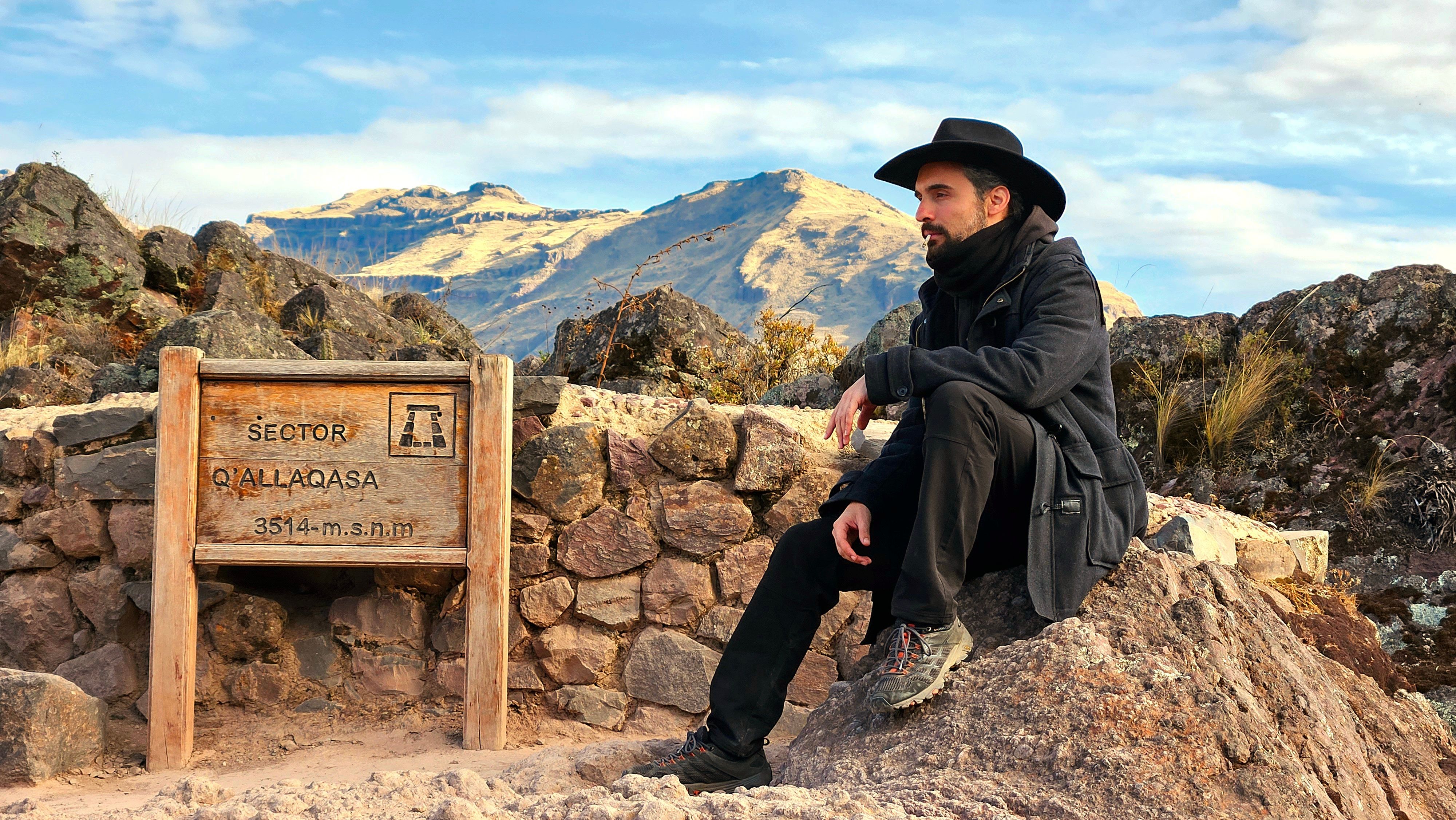
- A phrase that represents you: “Love and do what you will.” Although this opens up an interesting question… what does it mean to love?
- Your favourite music: I hesitate between “A Close Friend” by James Newton Howard and “The Letter That Never Came” by Thomas Newman. Or “No Time for Caution” by Hans Zimmer. There is truly spectacular music everywhere.
- Your favourite place: A grassy green hill with a solitary tree at the top, watching the sunset with a sky tinged with reds, pinks, oranges and blues, with a few clouds, without seeing what lies on the other side; and a gentle spring breeze blowing.
- A film or series you recommend: A Series of Unfortunate Events (2004), the film by Brad Silberling with Jim Carrey and Jude Law, with spectacular music by James Newton Howard.
- An anecdote from your time at UIC Barcelona: I’m not much for anecdotes, but I fondly and gratefully remember the graduation ceremony with my classmates and friends, and my family cheering from the audience. Giving the speech and having both my classmates from Audiovisual Communication and those from Advertising tell me they felt represented and moved… I loved it. And how we enjoyed ourselves afterward at the dinner and farewell to our university years. And of course, we were all very grateful that the university managed to have our graduation sponsor be none other than J. A. Bayona, just when he had released The Impossible and won the Goya for Best Director. I remember thinking, “The director of The Orphanage just handed me my diploma and I’m talking to him!”