María Carcaboso
Journalism | 2023
Amid all this noise, correspondents brings something that cannot be replaced: the ability to explain reality with nuance and context, incorporating counterpoints and analysis.
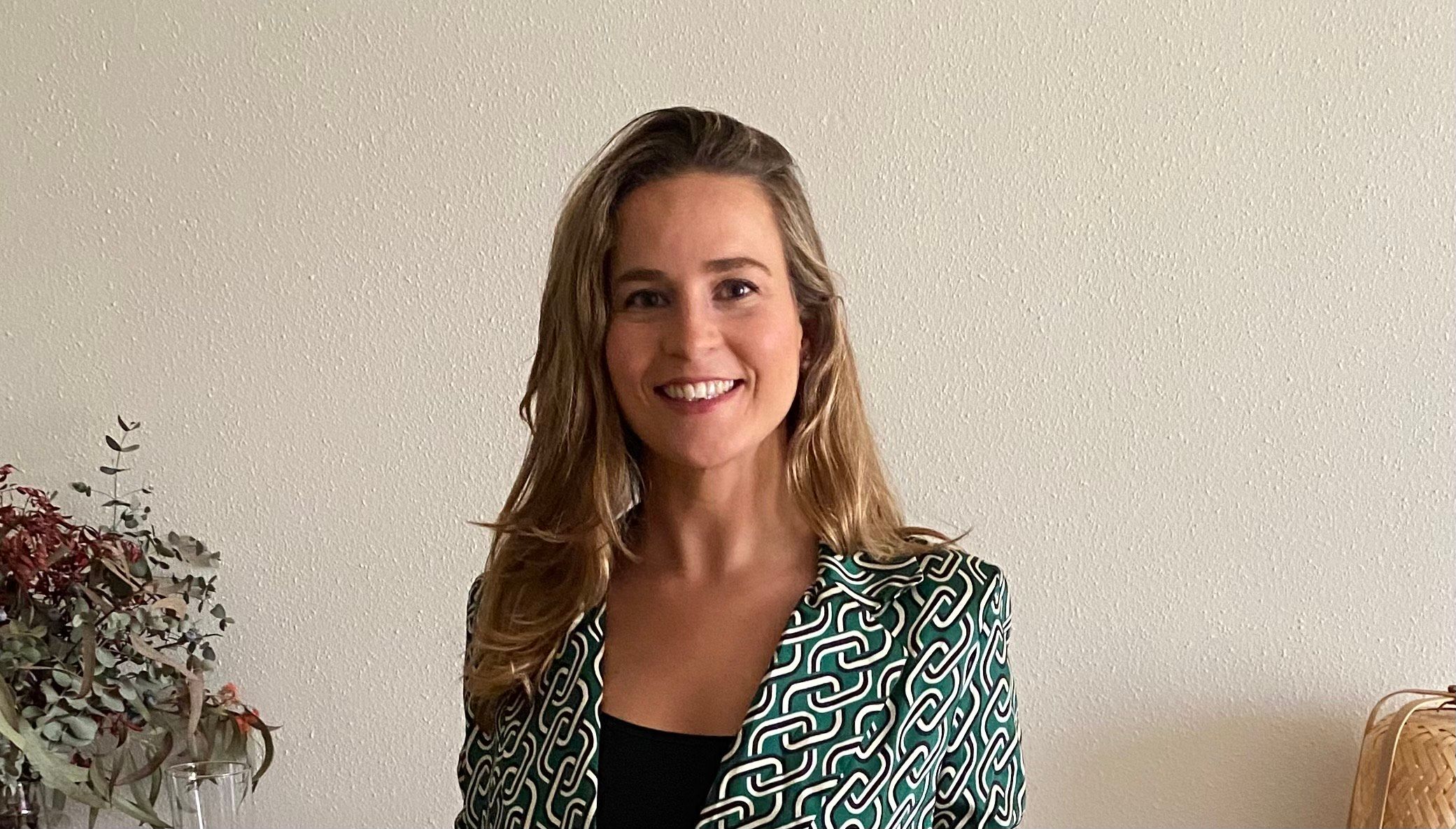
María Carcaboso (Journalism, 2023) is a correspondent and editor at the EFE Agency delegation in Bangkok. In this interview, María discusses how her time at UIC Barcelona helped her cultivate curiosity, adaptability and the ability to understand diverse perspectives, key skills in the world of international journalism. She reflects on her transition from student to professional in cities such as Tokyo and Bangkok, the challenges and opportunities of covering news from Southeast Asia and the keys to becoming an effective communicator in a global context. She also addresses the role of immediacy and social media in today’s journalistic practice, explores her interests in public policy and international relations and recalls anecdotes, sources of inspiration and personal experiences from her university years that shaped her professional development.
- Who is María Carcaboso? How would you describe yourself and what motivates you in your daily life?
I would describe myself as someone who is constantly curious to understand the world. Almost anything can capture my interest if it teaches me something new, whether by discovering different perspectives in everyday conversations or through encounters with new countries and cultures that introduce me to other realities.
In my daily life, I’m particularly motivated by having goals and by my work. I often reflect on how fortunate I am because of this. Working in a newsroom inherently means being continuously exposed to new and diverse topics, which aligns perfectly with my curiosity. As a correspondent, one day I might cover international economics, and the next, a natural disaster. The range is so broad that it provides a general understanding of many different subjects.
- Which lessons from your university years have had the biggest impact on your professional development as a journalist?
Looking back, I realise that the most valuable lessons came above all from the interactions I had with the people I met during my four years of study. From lecturers – some of whom I’m still in touch with – and classmates who are now close friends, to people I met during my work placements, volunteer work or even in the university cafeteria.
Being surrounded by people from different backgrounds allowed me to see the world from various perspectives and exposed me to very diverse ways of understanding life. I really enjoyed listening to their experiences and learning from everything they had to share, and I honestly believe that this richness of viewpoints, which, fortunately, I have been able to broaden further through my later experiences in Asia, makes you more adept at navigating different contexts.
- You graduated in 2023 and soon after stated working in Tokyo and Bangkok. How was this transition from student to professional?
For me, it felt like a very natural process. I started at EFE in year four at university through a journalism training grant from the Agency and “la Caixa” Foundation, which has shaped my career path ever since. Between October and July of my final year, I undertook a placement at EFE’s Barcelona office, followed by another work placement in Tokyo. I had a temporary contract there before moving to the Southeast Asia and Oceania office, which also serves as the Asia Desk.
That’s why I describe the transition as very natural and closely aligned with my expectations, as securing that grant to train and then work at EFE was a goal I had set for myself even before starting university.
- What are the keys to being a good communicator in a global context?
I don’t think there’s a single formula for success, because each context, no matter how global and interconnected, has its own particularities and is the result – sometimes even by chance – of many converging factors. What helps you be a good communicator or journalist in Washington is probably very different from what you need to succeed in Jerusalem, Madrid or any other city.
There is, however, one thing I always keep in mind. One of my first bosses at EFE, Paco Niebla, told me on my first day of my work placement: “You can’t be a good journalist without being a good person.” I genuinely believe that keeping this principle in mind not only helps you be a better professional, but also serves as a reminder of why we pursue a profession with such a deeply social vocation.
- What is the role of correspondents today, in a world of immediate information and social media?
Necessary. Being constantly connected can sometimes lead to the false perception that we fully understand realities thousands of kilometres away without actually being there. Yet telling stories at the source is incomparable to anything else.
The immediacy and the sheer volume of information have multiplied with social media and the internet in general, increasing the demand for rigour and requiring us to be almost surgical when selecting, contextualising and verifying what we report.
At the same time, social media has undeniably created new opportunities. The stories we tell gain greater visibility, help us connect with sources and allow us to build broader mental maps of what is happening, while paving the way for new narratives, among many other benefits. Of course, there are obvious risks that we all know: misinformation, the excessive immediacy with which users sometimes publish unchecked information, the misuse of technologies like artificial intelligence. Amid all this noise, correspondents brings something that cannot be replaced: the ability to explain reality with nuance and context, incorporating counterpoints and analysis.
- What challenges and opportunities do you find covering news from Southeast Asia?
In this region, the main challenge I’ve encountered has to do with sources and access to clear, structured information, unlike what I found in the two cities where I lived previously, Barcelona and Tokyo, where information is much more institutionalised. While this institutionalisation reduces disorder, it also has a flip side: it comes with a predefined framework that determines in advance what is relevant and how it is presented. The lack of such a framework in several Southeast Asian countries is an obvious challenge, but it also forces you to dig deeper, ask better questions and pursue what's really newsworthy.
Here, what we call in the newsroom “number games” are quite common, especially when covering natural disasters or armed conflicts, such as the recent clashes between Thailand and Cambodia. Added to this is the region’s linguistic diversity, which, though immensely culturally enriching, slows down certain processes.
Another significant and more general challenge is that media focus from Spain and Latin America – who represent most of EFE’s client media and are therefore the readers of our reports – is not on Asia. The global news agenda often overlooks this part of the world, and it is our job to make audiences understand why this part of the world matters. Yet there is another side to this: not being subject to the media overexposure of other regions means that correspondents have greater freedom to provide deeper explanations of key actors and issues. Everyone knows who Donald Trump and Nicolás Maduro are, and correspondents in Washington or Caracas don’t need to introduce them in every story; in Southeast Asia, on the other hand, full contextualisation is essential.
On a personal level, being here has been an enormous opportunity. Reporting from such a diverse, complex and underreported region has broadened my perspective. For example, I really enjoyed reporting from the Southeast Asia Leaders Summit (ASEAN) and allied countries in Kuala Lumpur, Malaysia, in late October, an intense four days of following leaders such as Donald Trump, Lula da Silva and António Guterres.
- What stories or projects would you like to cover or undertake in the coming years?
I am very interested in international relations and development, and even while working, I try to keep learning. Right now, for example, I am enrolled in a public policy course. It is fascinating to understand how public policies are designed and implemented.
I’m certain that I will never want to stop writing, and publishing a book is one of my goals. At the same time, professional life often takes you down paths you hadn’t previously planned or imagined. Over time, new interests emerge, and others that may have been latent come to the surface. In this sense, public policy and international organisations are areas in which I feel I could make a meaningful contribution.
I feel that I still have a few more years ahead of doing what I’m doing now in Asia, although not necessarily always from Southeast Asia. China, for example, is extremely interesting to me.
- A phrase that represents you: Knowledge takes up no space
- Your favourite music: Lately, I’ve been listening to a lot of Sabrina Carpenter and Olivia Dean.
- Your favourite place: Tavascan, a small village in the Catalan Pyrenees.
- A film or series you would recommend: Homeland
- An anecdote from your time at UIC Barcelona: If I had to choose a meaningful anecdote, I would undoubtedly pick graduation. But there’s also a funny story about my graduating class: on presentation day, before classes had even begun, the students from each degree had to take a photo holding a sign with the name of their programme. There were 80 students from Business Administration, 100 from Law, 50 from Humanities… and then it was Journalism’s turn, and only 9 of us showed up for the photo! We still laugh about it. Some say they didn’t even pose because they were so shocked and disappointed about how few of us were there – quite the opposite of what you expect at university: a lot of new people to meet.